
- LVP: waterproof planks and the safe pick for kitchens, baths, entries, and basements. About 2.50–13.50 per sq. ft. installed.
- Laminate: the best scratch resistance and budget-friendly, but its wood-fiber core can swell, so keep it in dry rooms. About 3–13 per sq. ft.
- Hardwood: costs the most (about 8–31 per sq. ft.) and handles water the worst, but it can be refinished and returns the most at resale.
- Pets and kids: laminate holds up best to claws, LVP to spills and accidents.
- In Clark County, check under the floor too: subfloor moisture and the crawl space vapor barrier matter as much as the floor you pick.
Quick Comparison: LVP vs. Laminate vs. Hardwood
| Factor | LVP | Laminate | Hardwood |
| Water | Waterproof planks in most rigid-core products | Water-resistant at best | Least tolerant of water |
| Scratches | Good, depends on wear layer | Very good | Scratches and dents most easily |
| Installed cost per sq. ft. | About 2.50–13.50 | About 3–13 | About 8–31 |
| Can be refinished | No | No | Yes (solid, and some engineered) |
| Resale value | Good | Fair | Highest |
Water resistance
LVP is made of vinyl layers over a rigid core. The two common cores are SPC (stone-plastic composite), which is denser and resists dents better, and WPC (wood-plastic composite), which is thicker and a little softer underfoot. The planks themselves don’t absorb water, but water can still seep through the seams, so a big leak can reach the subfloor underneath.
Laminate is a photo layer over a core of pressed wood fiber. Newer water-resistant laminates handle surface spills much better than older ones. But when MassLandlords soak-tested several off-the-shelf laminates for two days, including products sold as waterproof, none held up as truly waterproof.
Hardwood is real wood, so it absorbs water. Standing water can stain, cup, or warp the boards.
Durability and scratch resistance
Laminate has a hard, clear top layer. It’s rated by AC class, from AC1 for light foot traffic up to AC5 for busy commercial spaces.
LVP’s protection comes from its wear layer, measured in mils. For high-traffic areas, look for a wear layer of at least 12 mils. Vinyl is softer than laminate, so heavy furniture can dent it.
Hardwood scratches and dents most easily, but species matter. Harder woods like hickory and white oak rate well above walnut or cherry on the Janka hardness scale. The upside of any solid hardwood is that it can be sanded and refinished.
People also read:
Deck Repair vs. Replacement: How to Know What Your Deck Needs
Water Damage Restoration Process: What to Do in the First 48 Hours
Handyman vs. General Contractor: Who to Hire for Your Home Repair Project
Cost per square foot (materials + installation)
- LVP: About $2.50 to $13.50 per square foot installed, per HomeGnome’s cost guide.
- Laminate: About $3 to $13 per square foot installed, says HomeAdvisor.
- Hardwood: About $5 to $25 per square foot for materials, plus about $3 to $6 for labor, according to HomeAdvisor.
On a 500-square-foot main floor, a mid-range LVP at $6 installed comes to about $3,000. Mid-range hardwood at $15 installed comes to about $7,500. Removing old flooring, subfloor repairs, stairs and transitions add to either number.
Look, feel and resale value
Good LVP and laminate look much more like wood than they used to. They still feel different underfoot. Laminate can sound hollow, and vinyl feels a little softer and warmer.
Real wood still wins at resale. In the 2022 Remodeling Impact Report from NAR and NARI, refinishing hardwood floors recovered an estimated 147% of its cost when a home sold. New wood flooring recovered 118%.
Luxury Vinyl Plank (LVP): Pros and Cons
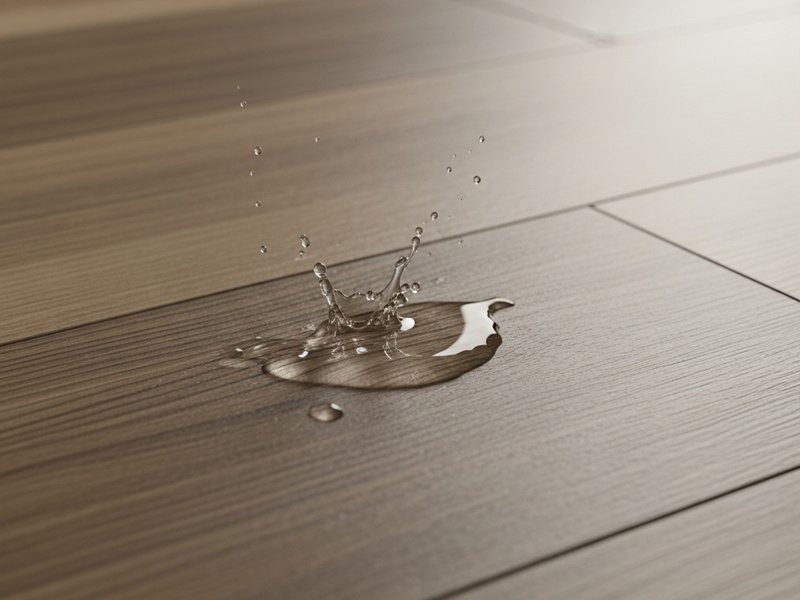
Pros: waterproof planks, comfortable and fairly quiet underfoot, low maintenance, and quick click-together installation.
Cons: can dent under heavy furniture, can’t be refinished, and quality varies a lot. Thin, cheap LVP often looks like plastic.
Best rooms for LVP
Kitchens, bathrooms, laundry rooms, mudrooms, basements and rentals. Anywhere water shows up, LVP is the safe choice.
Laminate Flooring: Pros and Cons
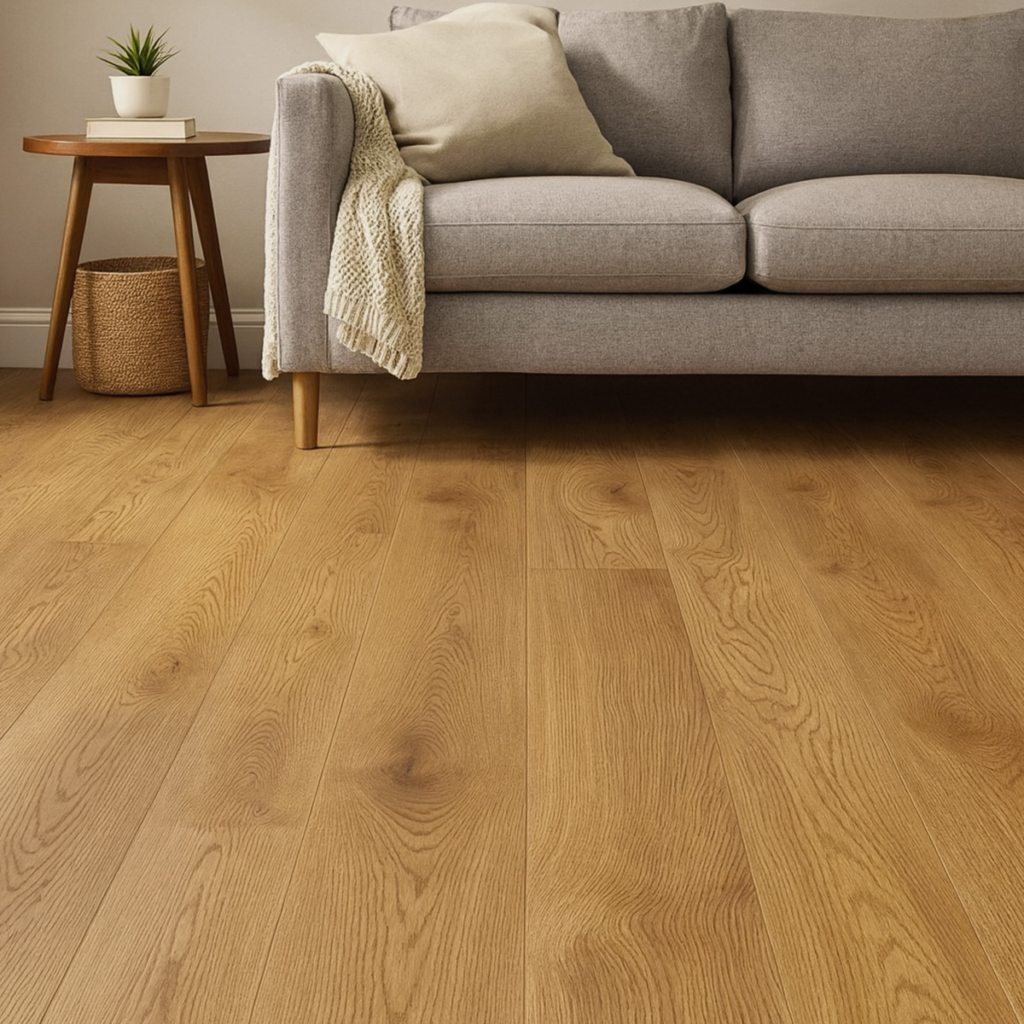
Pros: tough against scratches, usually budget-friendly, and a realistic wood look.
Cons: the core can swell if water sits on it, it can’t be refinished, and it can sound clicky without a good underlayment.
Best rooms for laminate
Living rooms, bedrooms, hallways, and home offices. These dry, busy spaces let laminate’s scratch resistance shine.
Hardwood Flooring: Pros and Cons
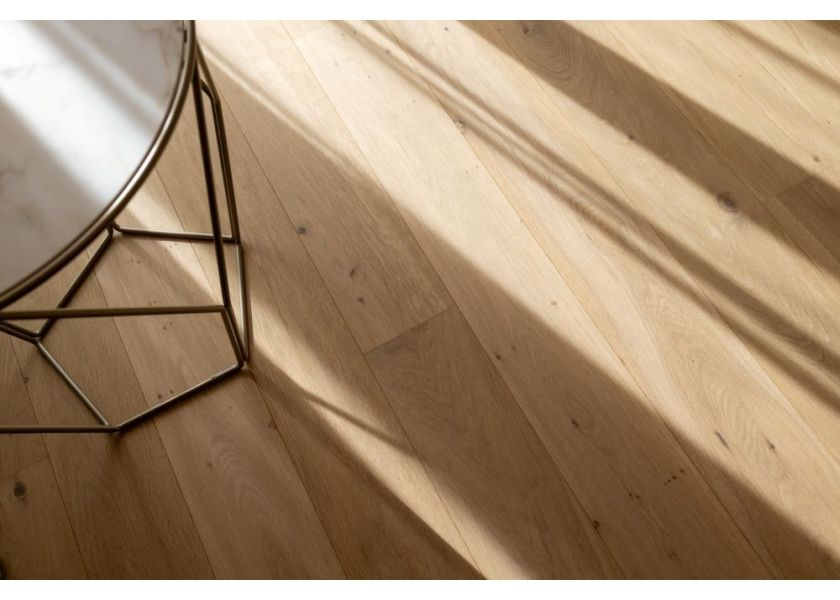
Pros: real wood, a long life, and the strongest resale value. HomeAdvisor says solid hardwood lasts 30 to 100 years.
Cons: the highest cost, sensitivity to water and humidity, and more visible scratches.
Solid vs. engineered hardwood
Solid hardwood is one thick piece of wood. It can be sanded and refinished many times, but it moves with humidity and doesn’t suit basements or bare concrete.
Engineered hardwood has a real wood top layer over plywood layers. It handles humidity swings better and, depending on the product, can go over concrete. It can only be refinished as many times as its top layer allows. HomeAdvisor puts engineered at about $5 to $20 per square foot and solid at about $10 to $25.
Best Flooring for Damp, Rainy Climates Like Clark County
Our long wet season brings muddy boots, wet dogs, and damp crawl spaces. Floors near the door and over concrete take the most abuse.
Moisture can also come from below. Many local homes sit over crawl spaces, so before new floors go in, it’s worth checking that the crawl space has an intact vapor barrier on the ground and decent ventilation. A damp crawl space will work its way into any floor above it, including “waterproof” ones.
Kitchens, bathrooms and mudrooms
LVP is the clear pick here. Skip laminate and solid hardwood in full bathrooms, where splashes and steam are daily. If a leak has already soaked your floor, deal with the water first: our water damage repair team can dry out and repair the subfloor before anything new goes down. New floors are also a common part of a bathroom remodel or a kitchen upgrade.
Homes with pets and kids
For claws, laminate’s hard top layer holds up best. For spills and accidents, LVP is safer. Many families use both: LVP in the kitchen and entry, laminate in the bedrooms. If you want hardwood, a harder species with a matte finish hides scratches better.
What to Expect From a Professional Floor Installation
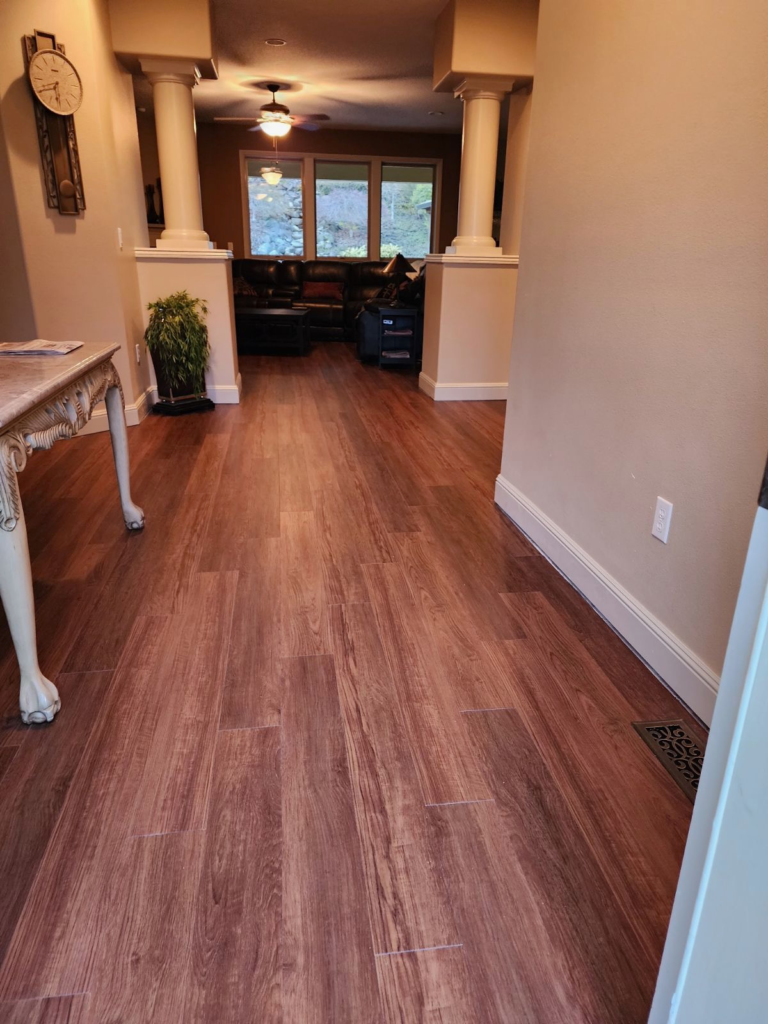
Subfloor prep and moisture testing
A good installer starts under the floor, not on top of it. Old flooring comes out, and the subfloor gets checked for soft spots, dips, and moisture.
Moisture matters most in our climate. National Wood Flooring Association guidance, reported by Hardwood Floors magazine, says the moisture content of hardwood and a wood subfloor should be within 2 percentage points for plank flooring (boards 3 inches or wider) and within 4 points for strip flooring (under 3 inches). Concrete is usually tested with a relative humidity probe or a calcium chloride test, and LVP or laminate over concrete often goes over a vapor barrier too. Skipping this step is behind many of the common flooring problems we get called to fix: gaps, cupping, squeaks, and lifting planks.
Installation timeline
Click-together LVP and laminate move fast. Once prep is done, a typical main floor often goes in over one to three days. Laminate usually needs about 48 hours to acclimate in the room, while some rigid-core LVP needs little or none, so follow the manufacturer’s instructions either way.
Hardwood takes longer. It has to acclimate until its moisture content is in range of the subfloor, which can take several days; then it’s installed, and site-finished floors still need sanding and coats of finish. Stairs, appliance moves, and old floor removal add time to any project.
How to Choose the Right Flooring Contractor
A good flooring contractor should:
- Be registered with Washington L&I. Our guide to handyman vs. general contractor shows how to verify any contractor in about five minutes.
- Test for moisture and fix subfloor problems before laying anything new
- Give a written quote that covers removal, disposal, trim, transitions, and moving furniture
- Follow the manufacturer’s installation rules, so your product warranty stays valid
- Stand behind the labor with its own warranty
Surprises are common once an old floor comes up: a soft subfloor, old water damage, or joists that aren’t level. Ask how a contractor handles those before work starts. The right answer is that they stop, show you the problem, and give you options with a written price before going further. Our flooring installation services cover hardwood, laminate, vinyl, and tile, including the subfloor repairs that often come with them.
Frequently Asked Questions
Is LVP better than laminate for bathrooms and kitchens?
Usually, yes. Most rigid-core LVP is waterproof, while laminate’s wood-fiber core can swell if water sits on it. Some water-resistant laminates handle quick spills, but LVP is the safer choice for wet rooms.
What’s the difference between SPC and WPC vinyl plank?
Both are rigid-core LVP. SPC (stone-plastic composite) is denser, thinner, and more dent-resistant, which suits busy homes and rooms with heavy furniture. WPC (wood-plastic composite) is thicker, a little softer, and quieter underfoot. Both are waterproof at the plank.
How long does it take to install flooring in a whole house?
For click-together LVP or laminate, most homes take a few days, including removal and prep. Hardwood can take one to two weeks once acclimation and finishing are included.
Can new flooring be installed over existing floors?
Sometimes. Floating LVP or laminate can often go over flat, well-attached hard flooring. It should never go over carpet. Your installer will also check door clearances and how the new height meets appliances.
Which type of flooring adds the most resale value?
Hardwood. The 2022 NAR and NARI report estimated that new wood flooring recovers 118% of its sale cost, and refinishing existing hardwood recovers 147%.
Does LVP flooring need an underlayment?
It depends on the product. Many LVP planks come with a pad already attached, and adding a second one can void the warranty. Over concrete, a vapor barrier is usually recommended unless the manufacturer says otherwise.
Get the Right Floor for Every Room
Lake’s General Contracting installs and repairs hardwood, laminate, vinyl, and tile floors for homes in La Center, Ridgefield, Battle Ground, Woodland, and across Clark and Cowlitz Counties. We’ll check your subfloor, talk through each room, and help you pick a floor that fits how you live.
Ready to compare options in your own home? Get a free flooring installation estimate or call us at 360-901-0292.