
| QUICK ANSWER Most decks need repair, not replacement. Swapping a few soft boards, tightening a loose railing, or replacing rusted hardware usually fixes the problem for far less than a new deck. Replacement makes sense when rot reaches the joists, posts, or ledger board, or when damage is spread across most of the deck. Early fall is the time to check, before winter rain soaks any damaged wood. Your deck takes more abuse in Clark County than almost anywhere else on your house. Months of rain, moss, and shade wear on wood in ways a dry climate never would. This guide covers the seven warning signs to look for, what repair costs are compared with replacement, and how to decide which one your deck needs. |
KEY TAKEAWAYS
- If the frame underneath is sound, repair almost always beats replacement.
- The ledger board, where the deck attaches to the house, is the sign to take most seriously. NADRA estimates about 90% of deck collapses start there.
- 2026 averages: about $2,246 for repair and about $8,000 for replacement.
- Stain only when temperatures will stay above 50°F for the next 48 hours with no rain coming. In Clark County, that window closes early in the fall.
- New decks that attach to the house or sit more than 30 inches off the ground generally need a building permit.
Deck Repair, Restoration or Replacement: Which Do You Need?
| Option | What it covers | Choose it when | Typical cost (Angi 2026) |
| Repair | Specific parts: boards, railings, stairs, hardware | The frame is solid, and the damage is limited to a few spots | About $2,246 average |
| Restoration | Deep clean, sanding, stain and sealer, plus small fixes | The deck is sound but gray, rough, or covered in moss | 550–1,250 to stain; 200–450 to pressure wash |
| Replacement | A new deck, or a new frame and surface | Rot in joists, posts, or ledger; the deck sways; most boards are failing | About $8,000 average |
What deck repair covers
Repair fixes specific damaged parts: a few rotted boards, a loose railing, a wobbly step, or rusted connectors. The rest of the structure stays in place.
What deck restoration includes
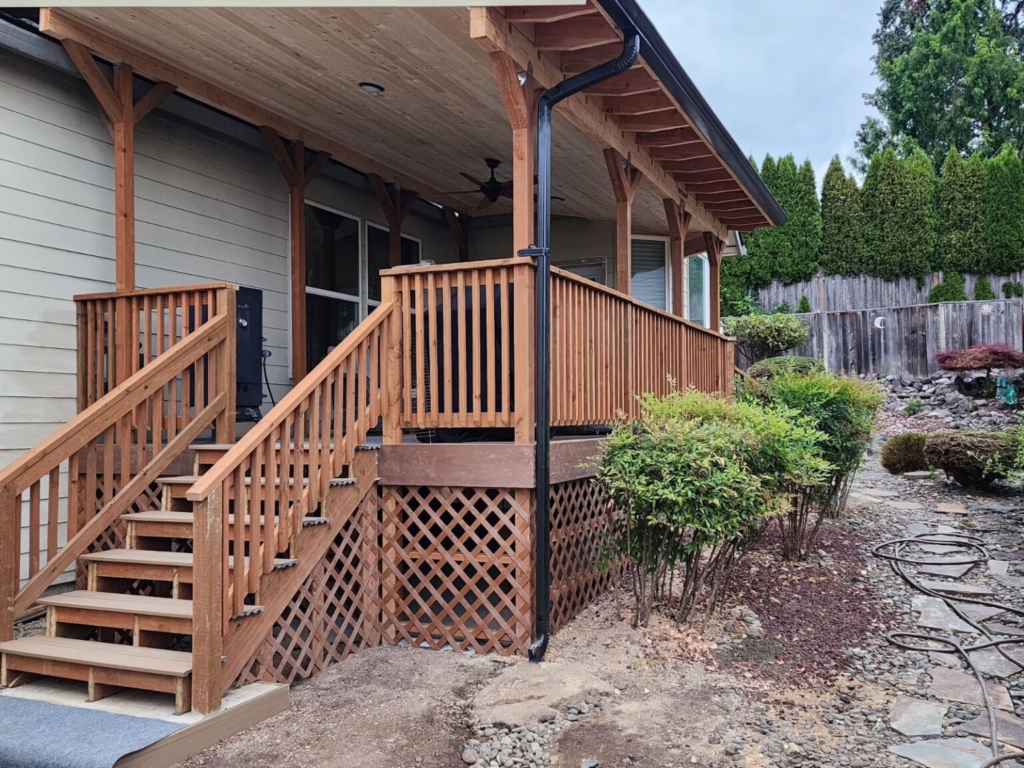
Restoration brings back a deck that is structurally sound but tired. It usually means a deep clean, sanding rough or gray boards, then a fresh coat of stain and sealer, with small repairs handled along the way. Lake’s General Contracting’s deck repair and restoration service starts with an inspection of the structure before any cosmetic work, so you’re not sealing over a problem.
When full replacement makes more sense
Replacement is the better choice when the frame itself has failed: rotted joists, posts, or ledger board, a deck that sways, or one that doesn’t meet current safety codes. If you’d be replacing more than about half the boards anyway, a new deck often costs less over its lifetime.
7 Signs Your Deck Needs Repair
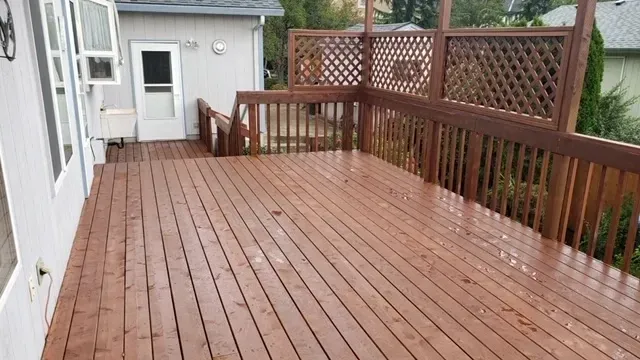
1. Soft or rotting deck boards
Push a flathead screwdriver into any suspect spot. If the tip sinks in easily, or the wood feels spongy and breaks off in short pieces instead of long splinters, you’re likely looking at rot. Check most carefully where boards stay shaded or wet, like near planters and under downspouts.
2. Loose or wobbly railings
Grab each railing and post and shake it firmly. It should feel solid. A railing that moves is a fall risk, especially on a raised deck, so fix it before your next gathering, not after.
3. Rusted fasteners and joist hangers
Look under the deck at the metal brackets (joist hangers) and screws that hold the frame together. Heavy rust, flaking, or broken hardware weakens every connection it touches. Older decks were often built with hardware that wasn’t made for today’s treated lumber, which is more corrosive to standard steel.
4. Posts and footings showing rot or movement
Check where posts meet the ground or the concrete footing. That’s where water collects. Soft wood, cracks, or posts that lean, sink, or shift mean the deck’s foundation needs attention.
5. Moss, mildew, and algae
Green or black growth makes boards slippery and holds moisture against the wood, which speeds up rot. Professional power washing at the right pressure removes it without gouging the soft surface fibers the way a heavy-handed rental machine can.
6. Splintered and cracked boards
Splinters and long cracks show the wood has dried out and lost its protective finish. Cracks let water deep into the board, where it freezes and expands in winter. Small surface checks can be sanded and sealed. Deep splits usually mean replacing the board.
7. Deck pulling away from the house
This is the sign to take most seriously. The ledger board bolts the deck to your house, and the North American Deck and Railing Association estimates about 90% of deck collapses result from ledger connection failures. Most of those trace back to ledgers fastened with nails only, instead of bolts or structural screws.
Look for a widening gap where the deck meets the house, nails with no bolts, missing flashing above the ledger, or water stains on the siding below. If you see any of these, stay off the deck until it’s been checked.
How Pacific Northwest Weather Affects Your Deck
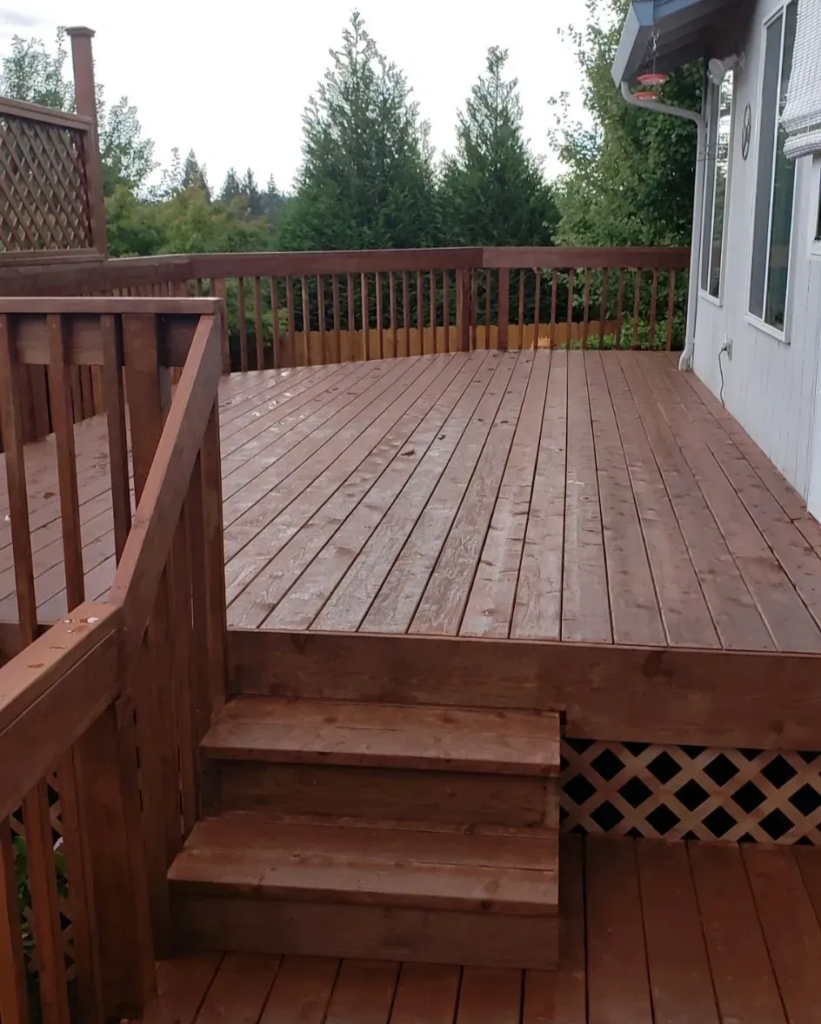
Moisture, rot and moss
Wood rots when it stays damp, and in our climate decks can stay damp for months. Shaded decks under fir trees get it worst, since moss and needles trap water against the boards. Covering part of the deck is one of the most effective ways to cut that exposure, and a deck cover also makes the space usable through the rainy season.
Why early fall is the window to seal and repair
Stain needs dry wood and steady warmth. Cabot’s product data sheets say not to apply its deck stains when the air or surface temperature is below 50°F or may drop below 50°F within 48 hours, or when rain is on the way, and to let freshly cleaned wood dry for 24 to 48 hours first. In Clark County, overnight lows usually slip below 50°F by mid-fall, so the staining window closes sooner than many homeowners expect.
Structural repairs are less fussy. Board, railing, and stair fixes can be done on most dry days, even into winter. Fixing soft spots now stops winter rain from turning small problems into structural ones. Timing can help your budget too: Angi notes that contractors are busiest from late spring through early fall, so cosmetic work booked outside that window may cost less.
Deck Repair Cost vs. Replacement Cost
According to Angi’s 2026 data, the average deck repair costs about $2,246, while a full replacement averages about $8,000.
Typical repair jobs and what drives the price
| Repair | Typical cost |
| Board replacement | 500–4,000 |
| Railing repair | 500–4,000 |
| Mold and rot removal | 200–500 |
| Pressure washing | 200–450 |
| Staining | 550–1,250 |
| Loose stairs | 25–50 per stair |
Wood vs. composite replacement
Angi puts decking material at about $8 to $20 per square foot for pressure-treated wood and $12 to $45 for composite. A new deck, fully built, runs roughly $30 to $60 per square foot. InterNACHI, the home inspectors’ association, estimates wood deck planks last about 15 years and structural wood 10 to 30 years, depending heavily on moisture. Composite costs more up front, but many composite brands carry warranties of 25 years or longer and never need staining.
DIY Deck Maintenance vs. Hiring a Deck Contractor
Plenty of upkeep is a good weekend project: sweeping off needles, clearing the gaps between boards, washing gently, and re-staining. Structural work is different. Joists, posts, footings, and the ledger board carry real loads, and mistakes there are safety problems, not cosmetic ones.
Permits matter for bigger jobs. In Washington, a new deck that attaches to the house or sits more than 30 inches above grade generally needs a building permit, while minor repairs rarely do. Lake’s General Contracting pulls any required permits and schedules the inspections.
Frequently Asked Questions
How long does a wood deck last in Washington’s climate?
InterNACHI estimates wood deck planks last about 15 years and the structural framing 10 to 30 years. Regular cleaning and sealing push those numbers up. Decks in deep shade or with poor drainage wear out sooner.
Can you replace just a few deck boards?
Yes. If the joists underneath are sound, damaged boards can be swapped out one at a time. New boards may look different at first, but they blend in after staining or weathering.
How often should a deck be sealed or stained?
Angi recommends staining and resealing every two to three years. Wet winters can shorten that. A quick test: sprinkle water on the boards. If it soaks in instead of beading up, it’s time.
Is it cheaper to repair or replace a deck?
Repair is almost always cheaper when the frame is solid. The average repair costs about $2,246, compared with about $8,000 for replacement, according to Angi. When rot reaches the joists or ledger, replacement often becomes the better value.
Can deck repairs be done in fall or winter?
Yes. Structural repairs and board replacement can be done on most dry days. Staining and sealing need temperatures that stay at 50°F or above for 48 hours and a dry forecast, so early fall is the last reliable window in Clark County.
Get Your Deck Inspected in La Center, Ridgefield & Battle Ground
Lake’s General Contracting repairs and restores decks across Clark and Cowlitz Counties, from board and railing fixes to full sanding, staining, and sealing. We’ll check the boards, railings, hardware, posts,s and ledger, then give you a straight answer on whether you need repair, restoration, or replacement.
Ready for an expert opinion? Call (360) 901-0292 to book a free, no-obligation deck inspection and quote. We serve La Center, Ridgefield, Battle Ground, Woodland, and the surrounding area.