
Key Takeaways
- Why cover a patio here: it turns a patio you use three months a year into one you use most of the year, and it protects decks, pavers, and furniture from constant rain.
- Most popular styles: attached solid-roof covers, freestanding pergolas and pavilions, and translucent polycarbonate covers that keep light coming in.
- Best materials for rain: aluminum for low maintenance, polycarbonate for light, and wood for looks as long as it’s sealed and maintained.
- Cost: about $8,500 on average for a professionally installed cover, or $10,000 to $22,500 for a complete covered patio with a new slab or pavers.
- Permits: Clark County lists patio covers among work that needs a permit, and a solid roof has to be built to local snow and wind loads.
The best patio cover ideas for the Pacific Northwest focus on keeping rain off without blocking light. An attached aluminum or wood cover with a solid roof gives the most protection, polycarbonate panels let daylight through, and a freestanding pavilion works where attaching to the house isn’t practical. Expect about $20 to $50 per square foot installed for most covers. In Clark County, plan on a permit and proper drainage for any covered patio.
Most backyard patios in Southwest Washington sit empty from October to May. Nobody wants to be outside, but sitting in the rain isn’t much fun. A patio cover changes that. It’s one of the few outdoor projects that adds months of usable space every year.
This guide covers the patio cover ideas that work best in a wet climate, the materials that hold up, what a covered patio costs, and the permit basics for homes in Vancouver, La Center, and the rest of Clark County.
Why a Covered Patio Makes Sense in the Pacific Northwest
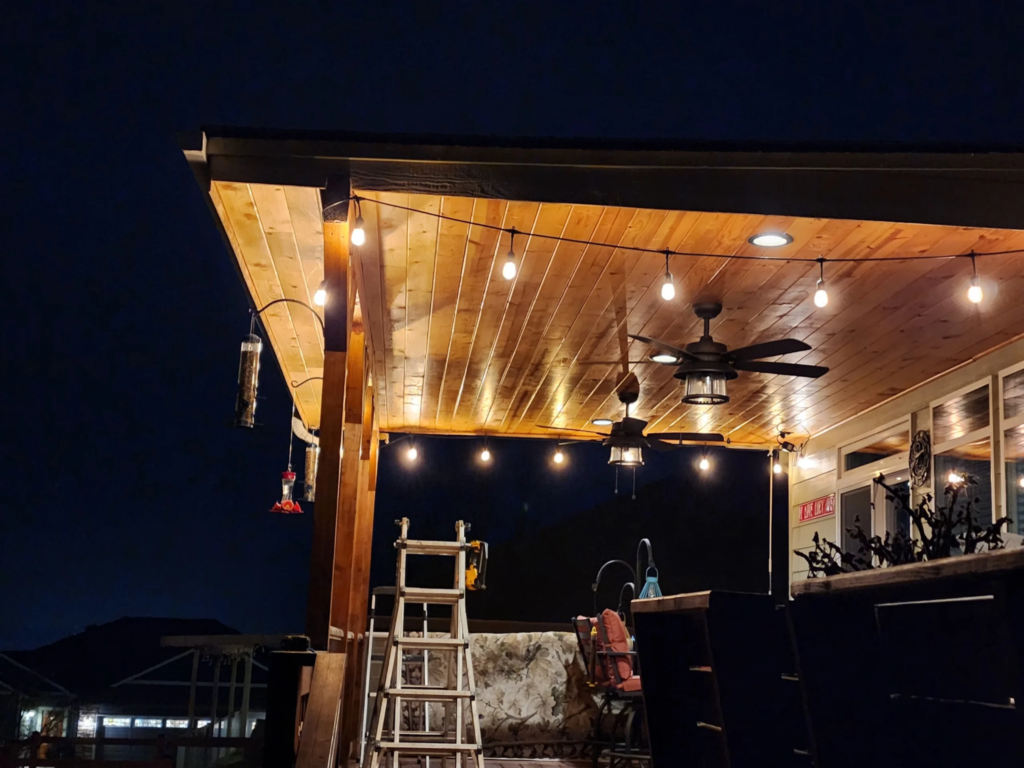
Year-round outdoor living despite the rain
From Vancouver to La Center, Ridgefield and Woodland, our winters are wetter than cold. Under a good cover, a morning coffee, a barbecue, or a night by a heater stays comfortable through most of the year. Add lighting, a ceiling fan or a heater and a patio starts working like an extra room.
Protecting decks, pavers and outdoor furniture
Constant rain is hard on everything outside. Wood decks grey, cup, and rot faster. Pavers grow moss and shift as water washes out the base. Furniture cushions never quite dry. A cover keeps the worst of it off, which means less cleaning, less deck restoration, and longer-lasting furniture.
Popular Patio Cover Styles
Attached solid-roof patio covers
An attached cover connects to the house on one side and sits on posts on the other. It’s the most popular choice here because it gives full rain protection and makes the patio feel like part of the home. A solid roof can be a simple shed slope or a gable that matches the house.
The detail that matters most in our climate is the connection to the house. The ledger board has to be properly flashed so water running down the wall doesn’t end up behind your siding.
Freestanding pergolas and pavilions
A freestanding structure stands on its own posts and footings. A traditional pergola has an open slatted roof, which looks great and gives some shade but won’t keep rain off. A pavilion or a pergola with a solid or louvered roof will. Freestanding covers are a good fit for a patio away from the house or a hot tub area.
Translucent (polycarbonate) covers for natural light
The biggest complaint about solid covers in the Northwest is that they make the house darker, especially in winter. Translucent polycarbonate panels solve that. They block rain and most UV while letting daylight through, so the rooms behind the patio stay bright. They’re a smart choice when the patio sits outside a kitchen or living room window.
Deck covers and carport-style covers
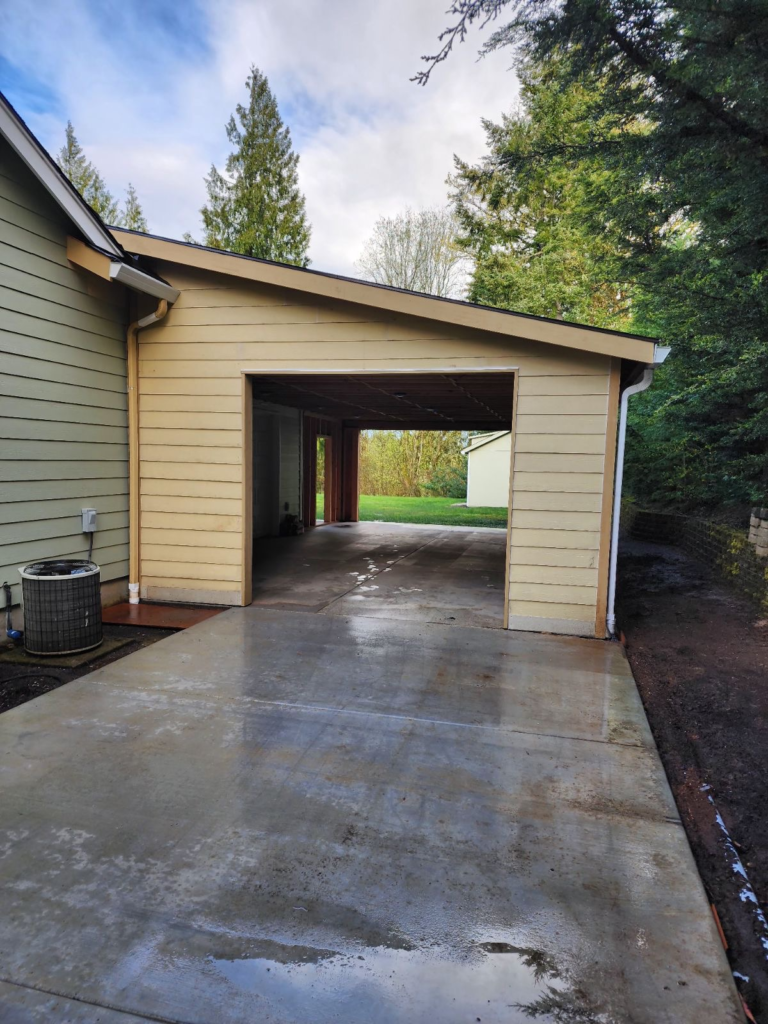
A cover doesn’t have to sit over a patio. A deck cover protects an existing deck the same way, and a carport-style cover keeps a car, boat, or firewood dry. These often use the same posts, beams, and roofing as a patio cover, just sized for a different job.
Best Materials for a Patio Cover
| Material | Installed cost per sq. ft. | Best for | Watch out for |
| Wood | 20–40 open lattice; 60–120 solid | Natural look, matching the house | Needs sealing or staining every few years |
| Aluminum | 20–50; insulated panels 30–60 | Low maintenance, won’t rot | Plainer look; basic panels can be noisy in rain |
| Polycarbonate | 20–75 depending on brand | Letting light through | Needs occasional cleaning to stay clear |
Cost ranges from HomeGuide’s covered patio cost guide, 2026.
Wood
Cedar and pressure-treated lumber are the classic choices. Wood looks warm, can match your house trim, and is easy to customize. In our climate, it needs a good sealer or stain from day one and a fresh coat every few years. Untreated wood will grey, check, and eventually rot.
Aluminum
Aluminum doesn’t rot, rust, or need painting, which makes it the lowest-maintenance option for a wet climate. Insulated aluminum roof panels add a foam core that quiets rain noise and keeps the space a bit warmer, and they can carry recessed lighting. Many aluminum systems come in wood-grain finishes.
Polycarbonate panels
Polycarbonate is a tough, lightweight plastic that comes in clear, bronze, and opal tints. Multiwall panels add some insulation and diffuse the light. Panels are usually mounted on a wood or aluminum frame, so you can combine materials: a cedar frame with a polycarbonate roof is a popular Northwest look.
Patio Construction Basics: Pavers, Concrete or Deck?
A cover is only as good as what’s under it. If you’re starting from grass, the patio itself is part of the project. Here’s how the three common bases compare:
• Poured concrete: about $4 to $30 per square foot depending on finish, with most homeowners paying $1,919 to $5,394, according to Angi’s concrete patio cost data. Durable and easy to clean.
• Paver patio: about $8 to $25 per square foot, per HomeAdvisor’s paver patio cost guide. Pavers drain better between joints and are easy to repair, but they need a well-compacted base to stay level in wet soil.
• Deck: a good choice on sloped lots or where you want the patio level with the back door. Not every deck can carry a roof, which is covered in the FAQ below.
Whichever you choose, plan the drainage first. Water from the cover’s gutters and downspouts needs somewhere to go other than your patio or foundation. Lake’s handles patio construction from the base up, so the slab, pavers, cover, and drainage are planned together.
Patio Cover Cost Factors
According to Angi’s patio cover cost data, a professionally installed patio cover averages about $8,500, with most homeowners paying $4,500 to $12,000. HomeGuide puts a complete covered patio new patio plus cover at about $10,000 to $22,500 for a typical 200-square-foot space. What moves the price:
• Size. Most covers run about $20 to $50 per square foot installed.
• Attached vs. freestanding. Angi puts attached covers at about $4,000 and freestanding at about $7,000 on average, since freestanding covers need extra posts and footings.
• Roof style. A gable roof that matches the house costs much more than a simple shed slope: HomeGuide puts it at about $70 to $155 per square foot.
• Material. See the table above.
• Electrical. Lighting runs about $80 to $300 per fixture, an outdoor outlet $180 to $350, and a ceiling fan $150 to $500 plus installation.
• Drainage. Gutters, downspouts, and any drain lines to carry water away.
• Permits. Usually $100 to $500, depending on where you live.
Do You Need a Permit for a Patio Cover in Clark County?
In most cases, yes. Clark County’s residential permits page lists adding a deck or patio cover among the work that needs a permit, and carports fall under the same accessory-structure permit. Electrical work for lights, fans, or heaters needs a separate electrical permit from L&I.
Permits matter more than usual for a cover because a solid roof has to carry Clark County’s minimum snow and wind design loads. A cover that’s under-built may look fine for years, then sag or fail after a heavy, wet snow. Don’t assume a freestanding pergola is exempt, either. Check before you build.
Inside city limits, including Vancouver and La Center, permits come from the city’s building department rather than the county.
Planning Your Patio Project With a Local Contractor
A good patio cover project usually follows these steps:
1. Decide how you’ll use the space: dining, lounging, a hot tub, or outdoor cooking.
2. Pick the location and size, and check how much light the rooms behind it need.
3. Choose the style and material.
4. Plan the base, drainage, and any electrical.
5. Get a written, itemized quote that includes permits.
Hire a registered, insured contractor who pulls the permit in their own name. Our guide to handyman vs. general contractor shows how to check any contractor’s L&I registration in about five minutes. You can also browse covered patios and decks we’ve built in our project gallery.
Frequently Asked Questions
How much does it cost to build a covered patio?
A professionally installed patio cover averages about $8,500, with most between $4,500 and $12,000, according to Angi. If you also need a new concrete or paver patio, HomeGuide puts the complete project at about $10,000 to $22,500 for a 200-square-foot space.
What is the best patio cover material for rainy climates?
Aluminum is the lowest-maintenance choice because it won’t rot or need painting. Polycarbonate is best if you want to keep light coming in. Wood works well too, but it needs to be sealed and maintained every few years in a wet climate.
Do patio covers need a permit in Washington?
Usually. Clark County lists patio covers among work that needs a permit, and most Washington cities require one as well. Electrical work needs a separate permit from L&I. Check with the county or your city before building.
Can a patio cover be added to an existing deck?
Often, yes, but deck framing isn’t usually designed to carry a roof. Most deck covers need their own posts and footings, or reinforcement of the existing deck. A contractor should check the deck’s framing and footings before designing the cover.
How long does patio cover installation take?
A simple attached cover can often go up in a few days once the permit is approved. A larger or custom cover with new footings, electrical, and gutters can take one to three weeks on site. Permit review adds time before work starts, so plan if you want it done before the rainy season.
Plan Your Covered Patio With Lake’s General Contracting
Lake’s General Contracting builds patios, patio covers, and decks for homes in Vancouver, La Center, Ridgefield, Woodland, and across Clark County. We’re a licensed, bonded, and insured general contractor based in La Center, and we handle the design, permits, construction, and drainage so your patio works in every season.